
What if we erased everything — every scripture, every formula, every trace of human knowledge?
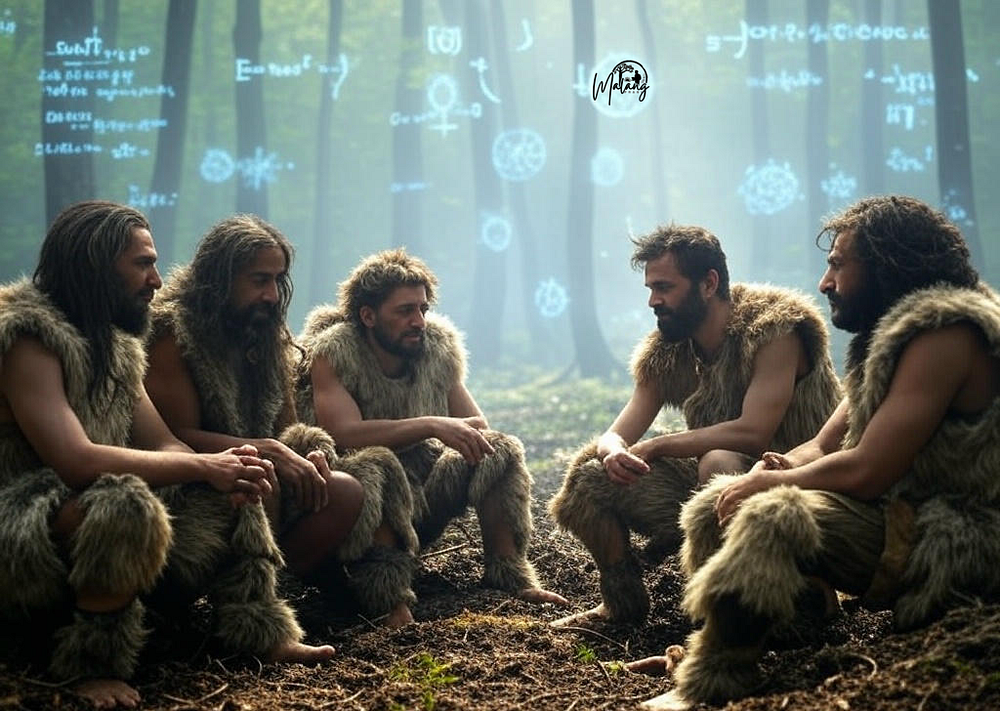
Imagine this: Today, every single religious book, scientific formula, cultural history, and philosophical theory is deleted. Gone. Vanished. No Vedas, no Quran, no Bible. No E = mc², no Newton, no quantum mechanics. A complete reset of human memory.
Now jump 3000 years ahead.
What do you think humanity will rediscover?
Will they find the same gods? The same scriptures? Or will they find gravity again, electricity again, and atoms again?
This blog isn’t here to disrespect faith or glorify science. It’s here to explore one simple idea: truth always comes back; belief doesn’t.
Why Science Will Always Come Back
Science is not something that needs to be believed in. It just is. It works, whether we agree with it or not. Gravity won’t stop pulling us down if we stop believing in Newton. Fire will still burn, and water will still evaporate under heat. These aren’t man-made laws — they’re the natural language of the universe.
Even if humanity restarts from zero, the journey of discovery will follow similar steps. Some discoveries might come earlier, some later. Maybe someone figures out protons before atoms. Or maybe someone cracks relativity before calculus. But eventually, the truths will come back.
Because these truths are not tied to any specific culture, geography, or belief. They’re universal. They’re like codes written into the fabric of nature, just waiting to be decoded again.
Religion Is Culture-Built, Not Reality-Built
Religion, on the other hand, is deeply tied to culture, location, language, and even weather.
Take the example: In India, the cow is worshipped. Why? Not just because of belief, but because of functionality. The cow gave milk, fuel (through cow dung), labor (through bulls), and more. In an ancient, minimalistic society like India’s, it made sense to protect such an animal. Worship was a way of ensuring survival.
Now compare that to a desert region, like parts of the Middle East, where cows weren’t as common. Naturally, those areas developed different practices, different values, and eventually, different religions.
So religion changes based on what people need to survive. And since every culture has a different history, the religions are also different. That’s why, if you erase everything today, and humanity starts over, the religions will never return in the same form.
You might get new gods, new beliefs, new scriptures — but not the ones we have today.
Religion is an Escape From Suffering
Another real point you made — religion often begins when pain becomes unbearable.
When people hit rock bottom, when they lose everything — be it family, health, career, or mental peace — they look for an escape. And religion gives them that escape. It gives them hope, structure, and sometimes just a reason to wake up the next day.
Religion is not just about rituals or beliefs — it’s also about coping.
People don’t always turn to it in times of joy — they go to it when everything else fails. That’s why temples, mosques, and churches become crowded after disasters, deaths, or personal losses. It’s a place to breathe when life suffocates you.
Most People Don’t Think Deep — And Religion Helps Them Cope
Another brutal truth is: most people never really get the time or mindset to think deeply about life.
They’re busy running their shops, doing jobs, surviving financially, handling families. They don’t get to sit and think about the meaning of life or the universe. And that’s okay.
But when suffering hits them hard — mentally, emotionally, or physically — they need something to hold onto. That’s where religion steps in. It becomes a crutch, and sometimes, even a lifeline.
For them, religion is not about understanding the universe — it’s about surviving it.
Religion and Science Are Not Opposites
This is where my thought process stands apart. Most people pit science and religion against each other — like they’re enemies. But I’ve said something more balanced:
Religion is necessary for many people to emotionally survive.
Science is necessary for humanity to evolve and grow.
Science gives us how things work.
Religion gives us why we should keep going when life gets tough.
They’re not fighting. They’re doing different jobs.
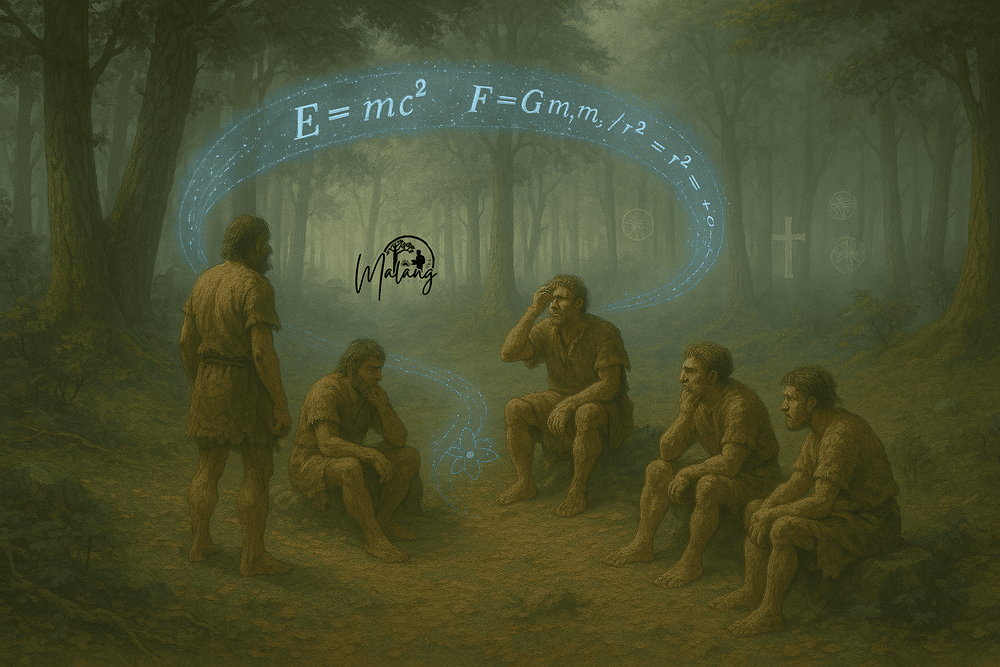
Final Thought: Only One Will Stay the Same
So in this 3000-year thought experiment…
Science will come back — same formulas, same truths, different path maybe, but same destination.
Religion? It will evolve, adapt, look different, maybe even disappear in the way we know it now. Because it’s made by people, for people — and people change with time, pain, and place.
But that doesn’t mean religion is useless. It just means it’s situational.
While science is universal.